
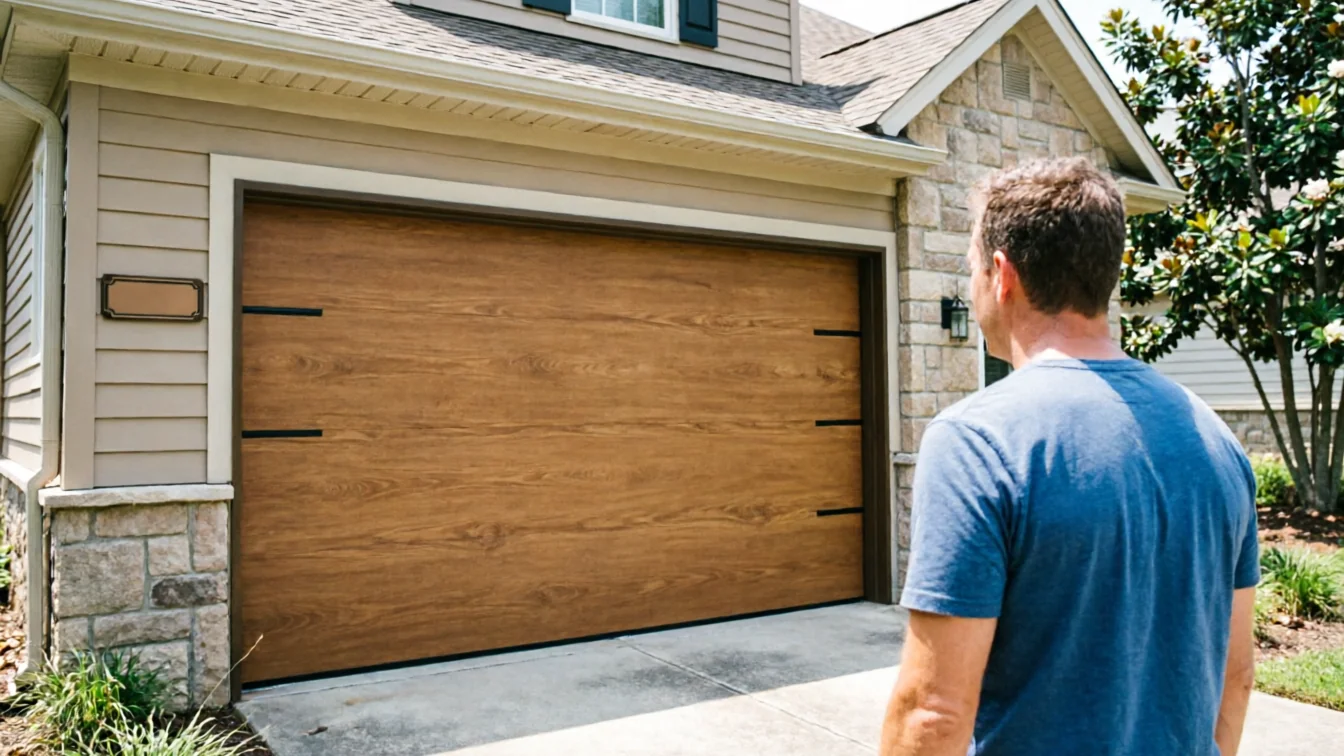
 Replacing an Old Garage Door in East Point
If your East Point garage door is original to a house built between the 1960s and 70s, here's what actually goes wrong and what replacing it really involves.
BlogEast Point, GA · 5 min read
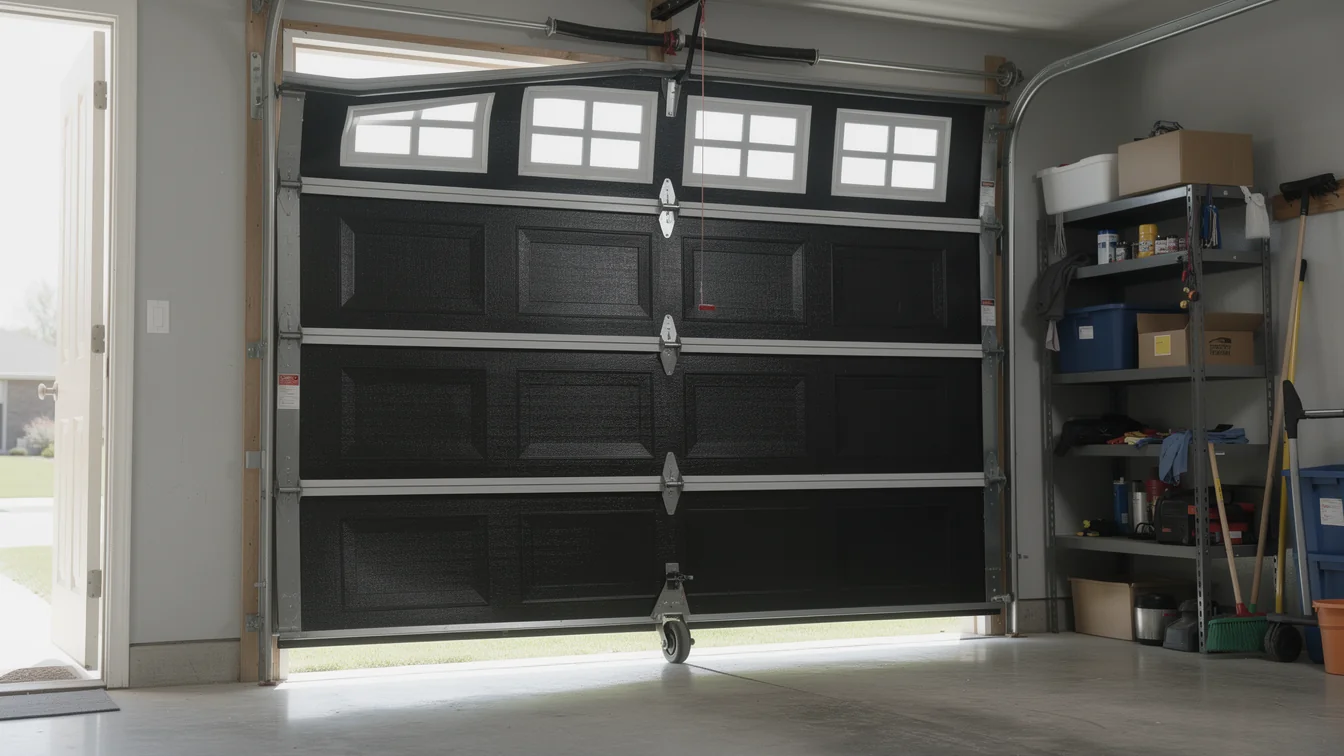
Why Your Garage Door Jumps the Track
East Point homes built mostly in the 1960s and 70s have track hardware that ages a specific way. Here's what actually knocks a door off its rails and what to check first.
Local detail
Checking It Yourself
Open the door halfway and look at the two vertical tracks on either side of the opening. Run your eye down each one from the bracket at the top to the floor plate at the bottom. You're looking for a gap where the track pulls away from the wall, a bend where the metal kinks instead of running straight, or rollers that sit loose inside the channel instead of riding flush against both walls of the track.
Most of the houses on this side of East Point went up between 1951 and 2007, with the bulk of that stock dating to the 1960s and 70s. That matters here because the track brackets on a door from that era were usually lagged into wood framing, not steel studs, and wood framing moves. Pull on the bottom bracket with your hand. If it flexes or the screws spin without biting, that's your answer before you even touch the opener.
Check the floor plates too - the brackets that anchor the bottom of each track to the slab. On a house this old, the original fasteners are sometimes still in place and have worked loose over decades of door cycles. A quarter inch of play at the floor shows up as a full inch of wander at the top of the track.
This is a five-minute check. It won't tell you whether the fix is a $20 bracket or a bent track that needs replacing, but it tells you where to start.
The area
Where People Go Wrong
The most common mistake is bending the track back by hand and calling it fixed. On a door from a 1960s or 70s build, the track gauge is often lighter than what goes into newer construction, and metal that's been bent once work-hardens at that point. It'll hold for a few weeks, then kink again, usually worse.
The second mistake is tightening the wrong thing. Homeowners find a loose bracket and crank down on the lag screw, but if the wood behind it has already compressed or split from thirty-plus years of vibration, the screw just spins in an oversized hole. You need a longer screw or a different anchor point, not more torque on the same one.
The third is ignoring the rollers. On houses with original hardware from that 1960s-70s window, steel rollers on plain bearings are common, and they wear unevenly over the decades. A roller that's gone oval-shaped will ride the track fine most of the time and then catch at the same spot on every cycle. People chase the track when the actual problem is the roller.
We don't push full hardware replacement on every call - if the track's straight and the brackets are sound, a roller swap is a cheap fix and we'll say so. Replacing track that doesn't need it just moves money out of your pocket for nothing.
What we find
What Is Going On
A garage door track only has one job: keep the rollers moving in a straight vertical-then-curved line as the door travels. When a bracket loosens, the track shifts out of that line by a small amount, and the rollers start fighting the track instead of running inside it. Every cycle after that makes the gap a little wider, because the rollers are now scraping metal instead of rolling on it.
In a house built in the 1960s or 70s, the vertical section of track is almost always lagged directly into the wood jamb or framing around the opening, since that's what the building code and typical construction called for in that window. Wood framing shrinks and shifts over fifty-plus years, and the lag screws don't move with it. The track stays bolted to a surface that's quietly changed shape underneath it.
The curved horizontal section near the ceiling is a second weak point. It's usually hung from a rear track bracket secured to the ceiling joist. If that joist has sagged even slightly over the decades - common in homes from this era - the curve pitches down or sideways, and the door binds right where it transitions from vertical to horizontal travel.
Neither of these is a dramatic failure. They're slow drift, which is why most people don't notice until the door is catching every time.
How we work
What the Weather Here Does to It
East Point sits in a cold-moderate climate band, meaning the ground and the building shell go through real freeze-thaw swings across the year rather than staying in one extreme. That cycle works on wood framing in a way that's easy to miss. The jamb and header around the garage opening expand slightly with humidity in warmer months and contract when it's cold and dry, and that movement happens right where the track brackets are bolted on.
Over a single season it's nothing. Over the decades these houses have been standing - most of this stock dates to 1951 through 2007, with a median build year around 1978 - that repeated flex loosens fasteners a little at a time. It's the same reason a door frame inside a house develops hairline gaps at the corners after enough winters.
The practical result: track brackets on an older East Point house need a fastener check more often than the same hardware would on a newer build with steel-stud framing that doesn't move the same way. We don't carry a fix for the framing itself - that's a carpentry problem, not a garage door one - but re-anchoring the bracket to solid wood, or moving it to a point that is solid, is squarely in our scope.
Questions
Common questions
How do I know if my track is bent or just loose?
Loose shows up as a gap you can rock by hand between the track and the wall bracket, usually at the bottom near the floor plate. Bent shows up as a visible kink or a spot where the rollers catch at the exact same point every single cycle. If tightening the bracket doesn't stop the catch, the track itself is likely bent and needs replacing, not just resecuring.
Can I keep using the door if it's off track a little?
Running it is risky. Once rollers are riding against the edge of the track instead of inside the channel, the cable and the opener's drive system take load they weren't built for. It can snap a cable or strip the opener's gear in one cycle. Stop using it and call before you force it through another open-close.
Is this a sign I need a whole new door?
Usually not. Track and bracket problems are a hardware fix, not a door replacement. Replacement makes sense when the panels themselves are warped or rusted through, which is a separate issue from the track running underneath them.
Why does this happen more in older East Point houses?
Houses built in the 1960s and 70s window, which covers most of the stock here, generally have track brackets lagged into wood framing rather than steel studs. That wood moves slightly with humidity and temperature over the decades, which loosens the fasteners holding the track in place. Newer construction with steel framing doesn't flex the same way.
Recommendation
You Might Also Like
More garage door guides for East Point homeowners.
Replacing an Old Garage Door in East Point
If your East Point garage door is original to a house built between the 1960s and 70s, here's what actually goes wrong and what replacing it really involves.
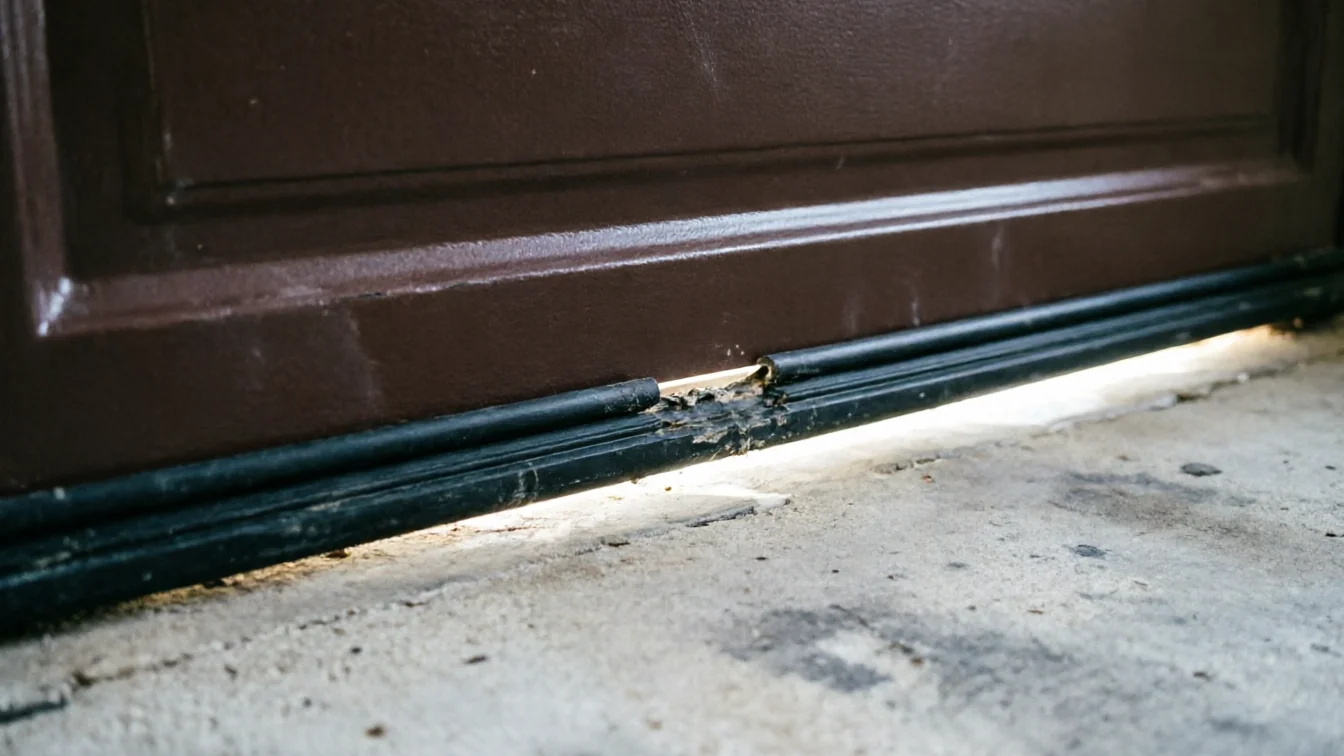 Checking Your Weather Seals and Draughts in East Point
How to check weather seals and draughts on an East Point garage door, built for the 1960s-70s housing stock and cold-moderate winters common here.
 Is Your Old East Point Garage Door Worth Fixing, or Done
East Point's housing dates mostly to the 1960s-70s with a 1978 median build year.
Ready when you are
Need a garage door sorted in East Point?
East Point Garage Door Pros repairs and installs garage doors, springs and openers in East Point, GA and the surrounding area.