
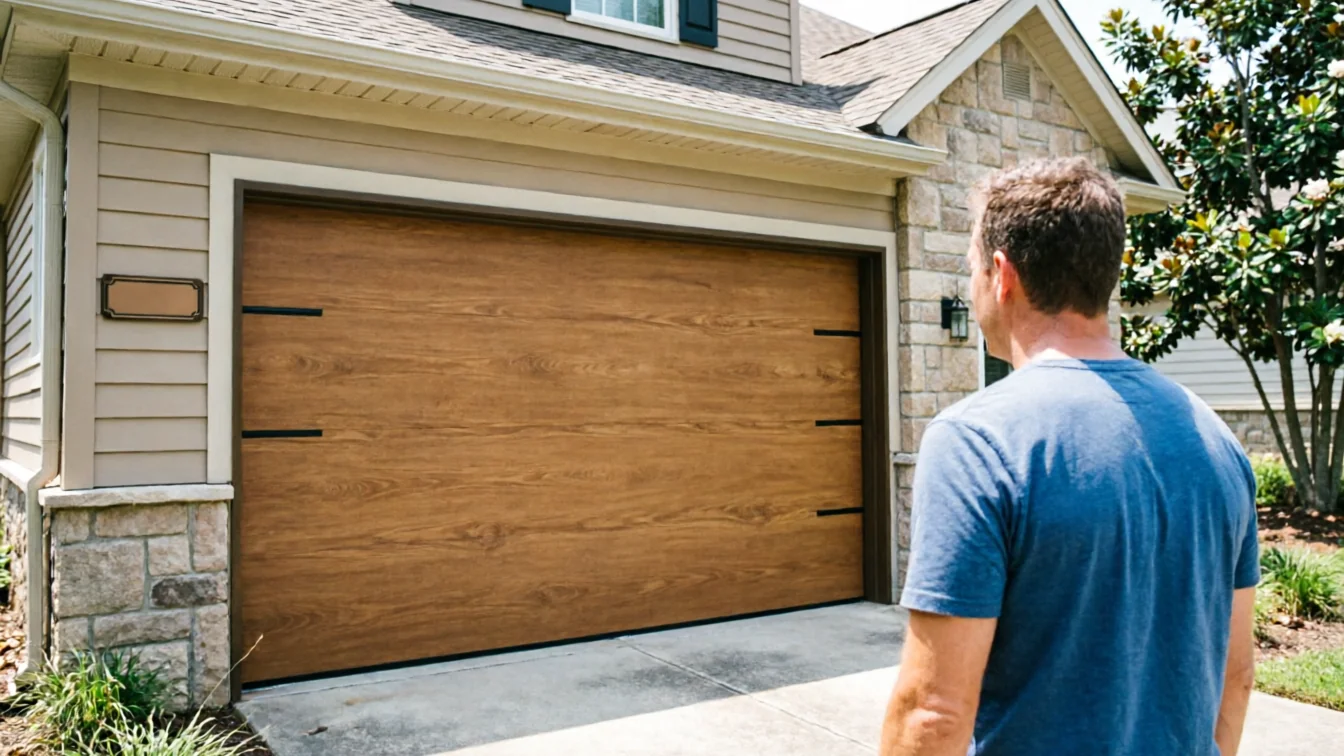
 Replacing an Old Garage Door in East Point
If your East Point garage door is original to a house built between the 1960s and 70s, here's what actually goes wrong and what replacing it really involves.
BlogEast Point, GA · 4 min read
Is Your Old East Point Garage Door Worth Fixing, or Done
East Point's housing dates mostly to the 1960s-70s with a 1978 median build year. Here's how to tell if your original door and hardware are still worth repairing.
Local detail
Checking It Yourself
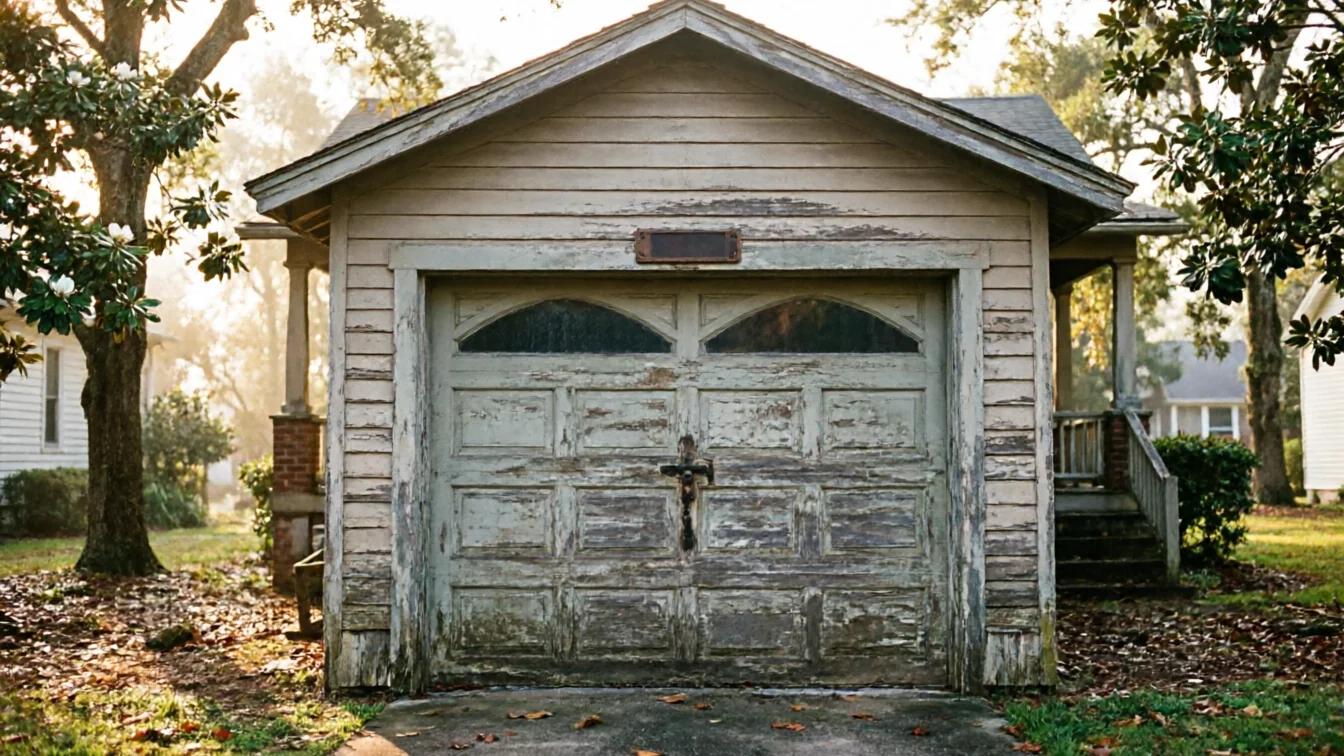
Before you call anyone, look at three things. First, the track - is it steel and bolted in sections, or has someone already swapped it for aluminum? A lot of East Point houses built in the 1960s and 70s still run original steel track, and that hardware holds up fine as long as the rollers are greased. Second, check the bottom panel for rust bloom, not just surface rust - East Point's housing stock runs from 1951 up through 2007, so what you're dealing with depends heavily on which part of town you're in. A door from a 1978-era build (the median year here) is a different animal than one from a 2000s infill lot. Third, lift the door by hand with the opener disconnected. If it's heavy or drops on its own, the spring is losing tension, not the door failing. None of this tells you whether to fix or replace, but it tells you what you're actually working with before someone gives you a number over the phone. If the panel is intact and the track is straight, you're usually looking at a repair, not a teardown.
The area
Where People Go Wrong
The most common mistake is treating a noisy door like a dying door. Rollers squeal for years before they fail, and in neighborhoods like Jefferson Park or Glenrose Heights, where a lot of doors are original to 1960s and 70s construction, that noise is often just dry steel rollers on original track - a lubrication job, not a replacement job. The second mistake is assuming age alone means the door is shot. A door built when the median house here went up, around 1978, isn't automatically worn out; torsion springs are rated in cycles, not years, and plenty of them are still well within life if the door hasn't been run hard. Where people actually get burned is ignoring a bent track or a cracked bottom panel because the door 'still goes up and down.' Those two things don't improve with time, and they put strain on an opener that was never built to fight misalignment. If you're not sure which category you're in, that's the actual question worth asking before spending money either way.
What we find
What Is Going On
Across the service area there are roughly 154,949 households and about 52,738 owner-occupied houses, and median household income sits at $63,308. That matters for this question because it sets the real math: a torsion spring replacement or a track realignment usually runs a few hundred dollars, while a full door and opener swap is a much bigger number. On a house built anywhere near the 1978 median here, with original hardware, a repair almost always pencils out first - the door panel itself, if it's steel and not storm-damaged, often outlasts two or three sets of springs. Where replacement starts making more sense is on houses at the older end of the range, closer to 1951 construction, where the door itself may be undersized for a modern opener or the track was never built for insulated panels. That's a judgment call that needs an actual look, not a guess over the phone. We'll tell you straight when a repair isn't worth doing - we don't have a reason to talk you into a new door if the one you've got has life left.
How we work
What the Weather Here Does to It
East Point sits in a cold-moderate climate band - not the deep freezes of the upper Midwest, but enough temperature swing between summer humidity and winter cold snaps to work metal hardware over the years. Torsion springs lose a little tension with every big temperature shift, and on a door that's been through forty-plus cycles of Georgia summer into winter, that adds up. Steel track also expands and contracts enough, season to season, to work bolts loose at the joints, which is why a track that was fine last spring can develop play by fall. None of this is dramatic weather damage - no hailstorms or ice dams to point to - it's just steady wear from a climate that never lets hardware sit still for long. If your door was installed anywhere close to the 1978 median build year for this area, it's been through decades of that cycle, and a seasonal check of spring tension and track bolts is worth more than waiting for something to fail outright.
Questions
Common questions
My garage door is from the 1970s - is that too old to fix?
Not by itself. Plenty of East Point houses were built right around that median 1978 year, and the door panel often outlasts several sets of hardware. Age tells you to inspect the spring, track, and rollers carefully, but it doesn't automatically mean replacement. A straight track and a solid steel panel are usually worth keeping and repairing.
How do I know if it's the spring or the opener?
Disconnect the opener and lift the door by hand. If it's heavy, uneven, or drops on its own, that's spring tension, not the opener. If the opener runs but the door doesn't move with it engaged, that's a different problem, often the drive gear or the chain, not the spring at all.
Is it worth replacing an old door just for better insulation?
That depends on what you're paying to heat or cool the space behind it, which we can't tell you without seeing the setup. In this climate band, insulation helps more in winter than it saves in summer. If the panel's structurally fine, we'd rather talk through the actual cost math with you than assume replacement is the answer.
Recommendation
You Might Also Like
More garage door guides for East Point homeowners.
Replacing an Old Garage Door in East Point
If your East Point garage door is original to a house built between the 1960s and 70s, here's what actually goes wrong and what replacing it really involves.
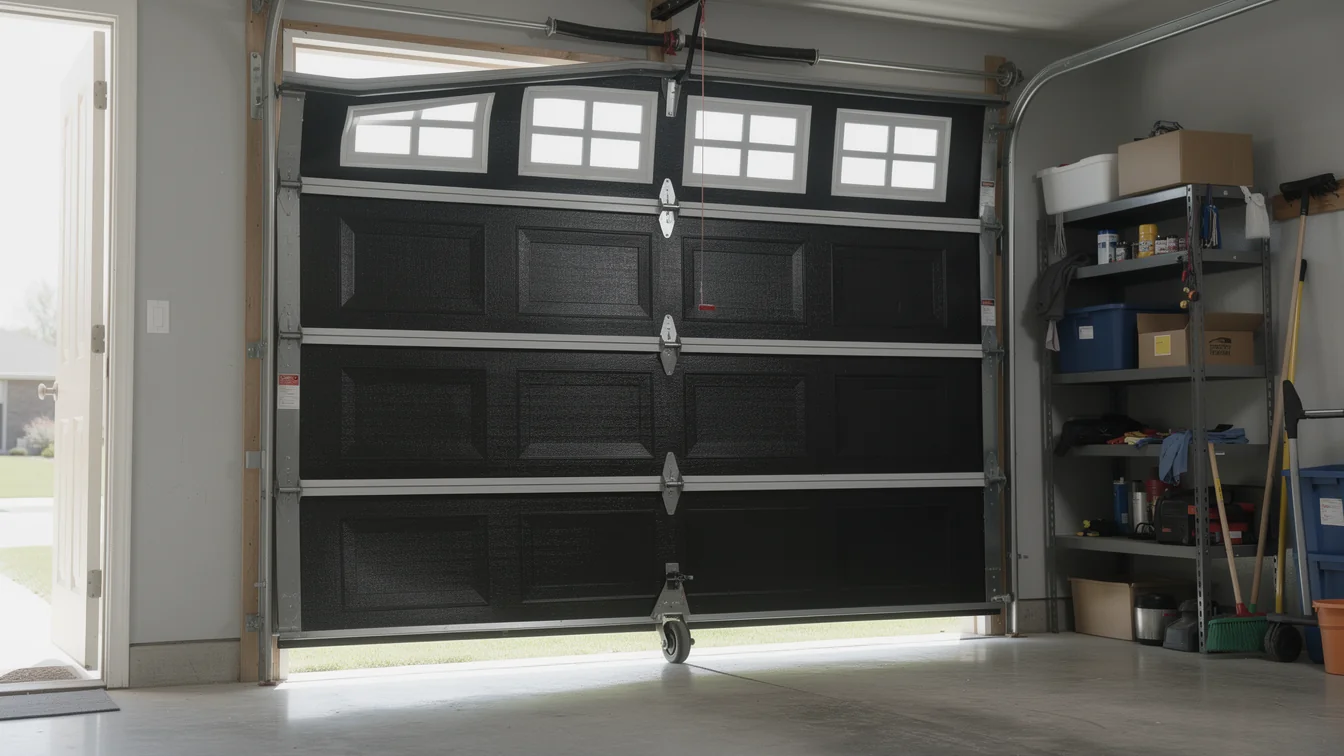 Why Your Garage Door Jumps the Track
East Point homes built mostly in the 1960s and 70s have track hardware that ages a specific way.
 The Noise Your Garage Door Is Making, and What It's Telling You
A grinding, popping, or thumping door in East Point usually points to one of a handful of causes tied to the age of the home.
Ready when you are
Need a garage door sorted in East Point?
East Point Garage Door Pros repairs and installs garage doors, springs and openers in East Point, GA and the surrounding area.